Hannover Expo 2000
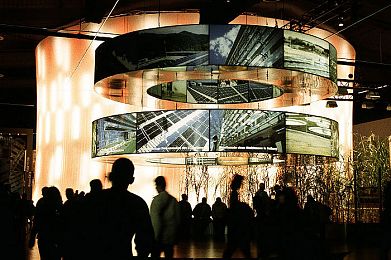
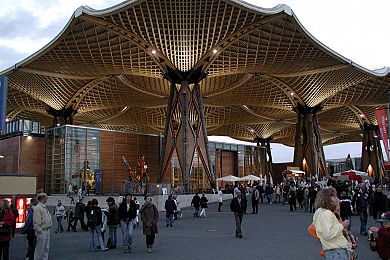
The world expo opening the third millenium was held in Hannover, a German city more know by businessmen than tourists, because of the major fairs held there since 1949. This was the first time that an international world fair was held in Germany. The theme of the expo was Humankind Nature and Technology. The expo opened on 1st june 2000 and ran for five months.
The masterplan was designed by swiss architects Studio Arnaboldi Cavadini, Locarno winners of the international competition held in 1992. This was the first time that B.I.E. allowed the reuse of already existing structure for an international world’s fair: those of Hannover’s trade fair: a 100 ha area to which 60 ha were added.
155 countries took part in this expo; U.S.A decided not to attend at the very last moment.
The german pavilion designed by architect Wund Gruppe; the 24,000 m² building was the largest nation pavilion at Expo.
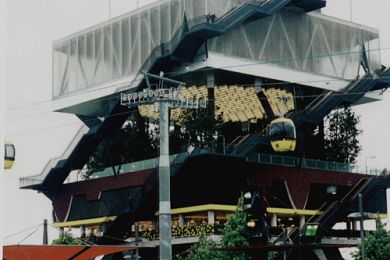
Between the most popular pavilions ther was the dutch pavilion designed by MVRDV that became quite famous after it. The theme ironically declined was Holland creates space: the six floor building showed six stacked landscapes till the roof terrace with lake and windmills producing energy for the building. It was not dismantled nor reused after the expo. There are rumours that it has been sold on ebay on 2005.
The Mexican pavilion 5 separates building linked through external ramps designed by famous architect Ricardo Legorreta, became the library of Braunschweig Fine Arts College.
Another famous pavilion was the Japanese one designed by famous architect Shigeru Ban collaborating with Otto Frei. The building 95meters long and 45 meters large. No bricks or nails or concrete have been used. This was the largest paper building in the world with fabric laces sustaining the three domes. It was all reusable even if Shigeru Ban was forced by german rules to use internal iron tie rods and external pvc membranes that in his world compromised the purity of his project.
18 million people visited the expo: less than expected and there was a financial lack of 600 million dollars.
In the long term there have been positive effects for the city for the increased quality of infrastructures and public transports.
With the occasion of the expo the ecological Kronsberg district adiacent to expo area was realized., Expo-settlement Kronsberg consists of approximately 3,000 residential units. low-energy building design. The heating energy consumption per household is about 40% and CO2 emissions of almost 75% lower than conventionally generated buildings.
Some of the buildings on the EXPO site were sold after EXPO 2000 ended, but most of the exhibition area is still used for major fairs in Germany, and for large events.


